
DIY Backyard Rink vs. Hiring a Builder in Toronto: A Decision Guide
Quick summary: Building a DIY backyard rink in Toronto is possible but depends heavily on getting three things right from the start: understanding your yard’s slope, using the correct framing materials, and choosing the right liner. The most common DIY failures in GTA backyards come down to underestimating slope, inadequate bracing, and wrong liner selection. A professional builder eliminates these risks through proper site assessment, correct materials, and experience across hundreds of installs. This guide helps you decide which route makes sense for your yard.
Building a backyard ice rink in Toronto sounds straightforward until you’re standing in your backyard in November with a collapsed frame, a punctured liner, and water pooling on the wrong side of the yard. This guide gives you an honest look at what DIY actually involves, where it goes wrong, and how to decide which route makes sense for your specific yard.
What Does Building a DIY Rink Actually Involve?
A backyard rink is not just a frame and some water. To build one that actually holds ice and survives a GTA winter, you need to get three things right from the start.
The first is understanding your slope. Every yard has some degree of incline, and water follows gravity without exception. Before you drive a single stake into the ground you need to know exactly how much your yard slopes and in which direction, because your entire frame height and bracing system is built around that number.
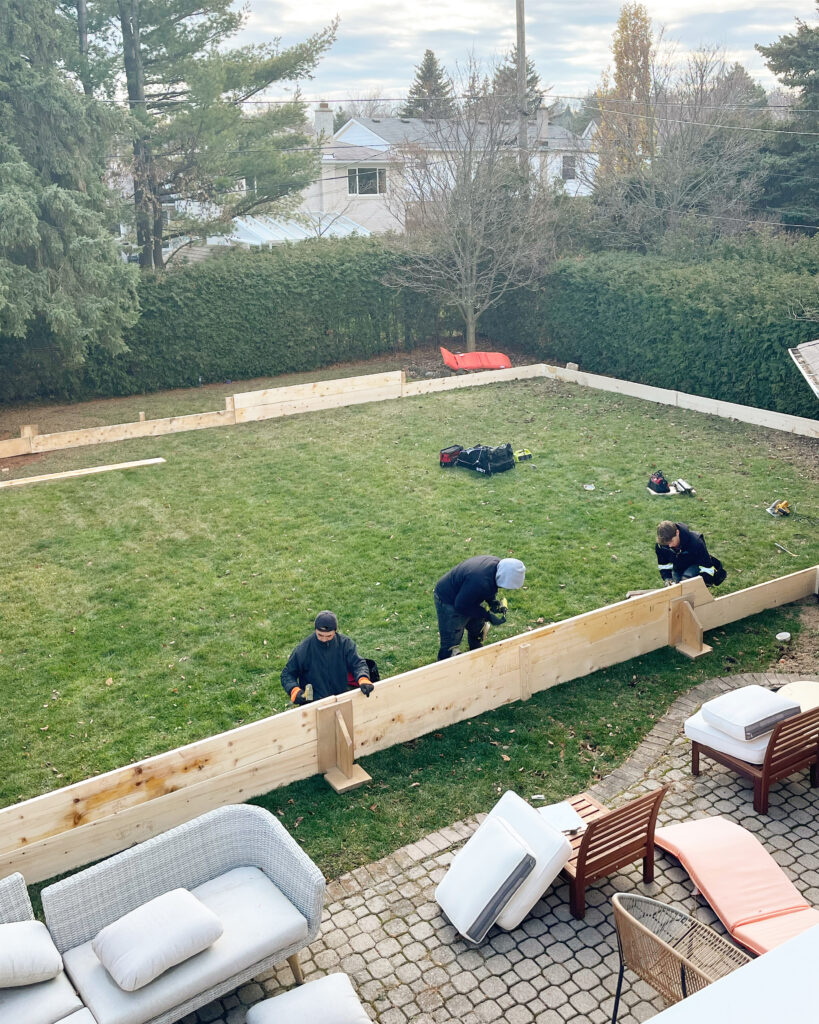
The second is building a frame that reflects that slope. This means constructing boards at varying heights across the perimeter so that when the liner is filled, the water levels out evenly across the full surface. Get this wrong and you end up with deep water on one end and bare ground on the other.
The third is choosing the right liner. Liner selection involves three variables: colour, size, and thickness. All three matter, and a mistake on any one of them can cost you the entire season.
Where DIY Rinks Go Wrong in GTA Backyards
Having helped hundreds of GTA homeowners with their DIY rink builds over the years, we have a clear picture of where things go wrong and why. These are the most common failures we see.
Underestimating the Slope
This is the most frequent mistake. Homeowners eyeball their yard, assume it is close enough to flat, and build a uniform frame. When the water goes in, it flows to the low end. The result is a rink with a foot of water on one side and exposed liner on the other, which means uneven ice at best and no ice at all in the shallow end.
Inadequate Bracing
A liner filled with water creates enormous outward pressure on the frame. Without proper bracing and staking, the boards bow and eventually collapse outward. This can happen gradually over a few weeks or all at once during a warm spell when the ice softens and the water pressure increases.
Wrong Building Materials
Not all lumber handles a GTA winter the same way. Using the wrong grade or type of wood can lead to warping, splitting, and frame failure mid-season. We have responded to calls from DIY rink building homeowners whose frames gave out in January with a full sheet of ice sitting on top, and getting that situation under control mid-winter is significantly harder than building it right the first time.
Wrong Liner Colour
Liner colour directly affects ice quality. Dark liners absorb sunlight and retain heat, which inhibits freezing and accelerates melt during any warm stretch. White liners reflect sunlight and give you the best chance of maintaining solid ice through the season. This is non-negotiable.
Liner That Is Too Thin
A cheap or undersized liner will not survive contact with forgotten debris under the surface. A single twig, root, or small rock you did not notice during setup can puncture the liner once the weight of the water presses down. Once it is punctured, your season is over.
What a Professional Rink Builder Does Differently
The difference between a professional install and a DIY attempt comes down to preparation, materials, and experience.
A professional builder starts with a proper assessment of your yard’s slope, not an estimate. At Rinkbuild we laser level every site before we build anything. That measurement determines the exact frame height needed at every point along the perimeter to produce a level water surface.
From there we use the right lumber grades and bracing systems for the specific conditions of your yard, whether that is grass, concrete, stone, pavers, or a sloped surface requiring a platform build. The staking and bracing we use is built to hold through an entire Toronto winter including freeze-thaw cycles and heavy snow loads.
We also use the correct liner every time. White, properly sized with at least two to three feet of overhang on each side, and thick enough to handle whatever is underneath. Liner selection is one of the areas where experience matters most because the right choice depends on the specific dimensions and surface conditions of your yard.
The result is a rink that holds ice from first flood to final skate without the troubleshooting, the mid-season failures, and the wasted weekends that come with figuring it out for the first time.
How to Know Which Option Makes Sense for Your Yard
The honest answer starts with understanding your yard, not your budget.The honest answer starts with understanding your yard, not your budget.
The first thing to determine is your true slope. A laser level reading gives you a precise measurement that tells you whether a standard rink is possible or whether your yard requires a platform build to compensate for the grade. This is not something you can accurately assess by eye.
The second factor is your surface. Building on grass is different from building on concrete, stone slabs, or pavers. Each surface requires a different approach to framing and staking. A professional builder will identify the right system for your specific surface before any materials are ordered.
If your yard is relatively flat, your surface is straightforward, and you are comfortable with a full weekend of physical work and the risk of trial and error, DIY is achievable. If your yard has significant slope, an irregular surface, or you simply want a rink that works properly from day one without the risk, hiring a professional is the more reliable path.
What to Ask Before You Hire a Rink Builder in Toronto
Not all rink builders operate the same way. Before you hire anyone, ask these questions directly:
- What are the total costs and what is included? Get a full breakdown, not a single number.
- When will the liner be installed? The frame can go in before the freeze but the liner goes in once temperatures are consistently cold enough. A builder who cannot answer this clearly does not have a defined process.
- Is water included or is filling your responsibility? Some builders include a water truck service, others do not.
- What type of lumber and framing materials do you use? Understand exactly what is going into your yard.
- What is your bracing and staking system? This is what holds the rink together all winter. It should have a clear answer.
- Do you carry liability insurance? A rink involves large volumes of water in a residential backyard. Any legitimate builder carries coverage.
- What are your guarantees? If something fails mid-season, what is their policy? Get this in writing before you commit.
A builder who answers all of these confidently and specifically is worth talking to further. One who deflects or gives vague answers is not.
Frequently Asked Questions
How much does it cost to build a DIY backyard rink in Toronto?
Material costs for a DIY backyard rink typically run between $900 and $1,500 depending on the size of your rink and the materials you choose. This is similar to what a professional builder pays for materials, but does not account for your time, the risk of mistakes, or the cost of fixing problems mid-season if something goes wrong.
What is the most common reason DIY backyard rinks fail in the GTA?
Underestimating yard slope is the number one reason DIY rinks fail. When the frame does not account for the true grade of the yard, water pools on the low end and leaves the shallow end without enough depth to freeze properly. A laser level assessment before building eliminates this problem entirely.
What colour liner should a backyard ice rink use?
Always white. Dark coloured liners absorb sunlight and retain heat, which works against freezing and accelerates melting during any warm stretch. A white liner reflects sunlight and gives you the best chance of maintaining solid ice through the full GTA winter season.
Do I need to laser level my backyard before building a rink?
Yes, if you want accurate results. Eyeballing a yard’s slope is one of the most common mistakes DIY builders make. A laser level gives you the precise measurements needed to build a frame that produces a level water surface, which is the foundation of a rink that actually holds ice evenly from end to end.
Does a professional rink builder carry insurance?
Any legitimate backyard rink builder in Toronto should carry liability insurance. A rink involves large volumes of water in a residential backyard and insurance protects both the homeowner and the builder if something goes wrong. Always ask for proof of coverage before signing anything.
Can a backyard rink be built on concrete or pavers instead of grass?
Yes. Rinks can be built on grass, concrete, stone slabs, and pavers. Each surface requires a different approach to framing and staking. A professional builder will assess your specific surface before recommending the right system. Building on a hard surface without the correct setup can damage both the surface and the rink frame.
Thinking about a backyard rink this winter? Contact Rinkbuild for a free estimate and site assessment. We serve Toronto and the GTA and start installations in October.